

Blog
What Defines Luxury Furniture? Materials, Craftsmanship & Design
Jan
Luxury furniture is not just about price or appearance — it is about experience, emotion, longevity, and identity. In India, where heritage craftsmanship meets modern design sensibilities, the definition of luxury furniture has evolved into something far more meaningful than mass-produced aesthetics.
When discerning homeowners, architects, and hospitality brands search for luxury furniture India, they are looking for pieces that tell a story — of materials chosen with intention, craftsmanship perfected over time, and design that transcends trends.
So what truly defines luxury furniture? Let’s explore the three pillars that set it apart: materials, craftsmanship, and design.
Materials: The Foundation of Luxury Furniture
At the heart of all premium furniture in India lies one critical element — exceptional materials. Luxury furniture begins long before manufacturing; it starts with thoughtful sourcing.
a. Solid Woods with Character
Luxury furniture uses solid hardwoods, not engineered substitutes. Materials such as:
- Solid teak
- American walnut
- Oak
- Ashwood
These woods are chosen not just for strength, but for their natural grain, aging properties, and tactile warmth. Over time, high-quality wood develops a richer patina, making the furniture more beautiful with age — a hallmark of true luxury.
b. Natural Stones & Inlays
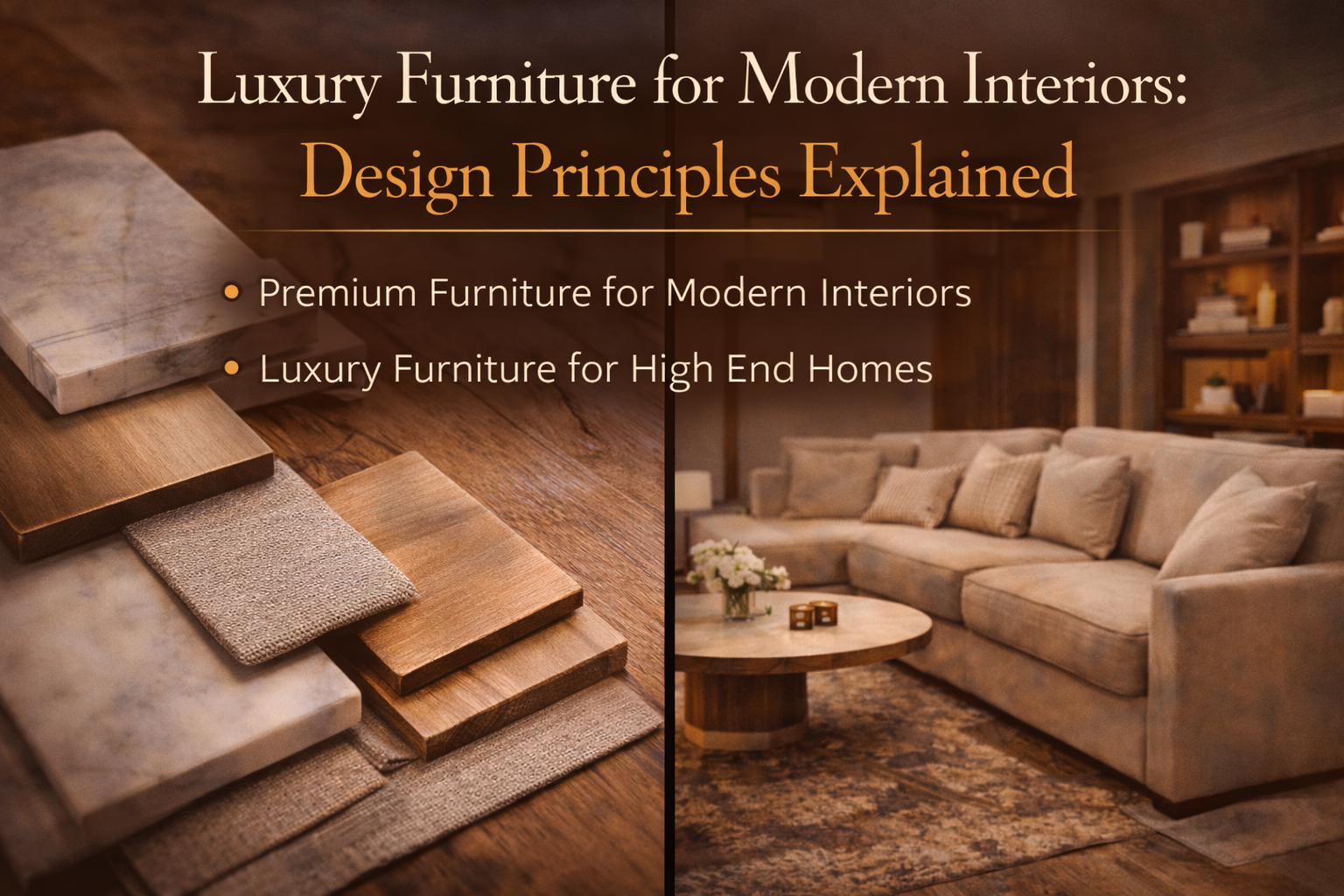
High-end furniture often incorporates marble, onyx, mother of pearl, brass, or semi-precious stones. These materials add depth, weight, and permanence to a piece.
In luxury furniture, stone is not decorative — it is architectural. Each slab is selected for veining, tone, and balance, ensuring no two pieces are ever identical.
c. Premium Upholstery & Finishes
For upholstered furniture, luxury lies in:
- Full-grain or top-grain leather
- High-density foams
- Hand-selected fabrics
- Natural veneers and lacquers
Finishes are non-toxic, layered, and hand-polished to achieve a depth that machine spraying cannot replicate.
In high end furniture India, materials are not chosen for cost efficiency — they are chosen for performance, aesthetics, and longevity.
2. Craftsmanship: Where Luxury Is Truly Created
Materials alone do not define luxury — craftsmanship does.
Luxury furniture is not assembled; it is crafted.
a. Skilled Artisans, Not Assembly Lines
True luxury furniture involves human expertise at every stage:
- Wood seasoning and joinery
- Precision cutting and shaping
- Hand sanding and polishing
- Manual upholstery and finishing
In India, this craftsmanship is rooted in generations of artisan knowledge, where skills are passed down, refined, and respected. Each artisan contributes a signature touch that machines simply cannot replicate.
b. Joinery That Lasts for Decades
Luxury furniture avoids shortcuts like nails or excessive adhesives. Instead, it relies on:
- Mortise and tenon joints
- Dovetail joints
- Reinforced corner blocking
These traditional techniques ensure structural integrity, making furniture strong enough to last decades — even generations.
c. Attention to the Invisible Details
One defining trait of premium furniture India is that it looks just as refined on the inside as it does on the outside. The back panels, inner frames, and concealed surfaces receive the same level of care as visible areas.
Luxury is found in the details most people never see — and that’s precisely the point.
Design: Beyond Trends, Toward Timelessness
Luxury furniture design is not about following trends — it’s about setting a lasting design language.
a. Proportion, Balance & Restraint
Luxury design values:
- Clean proportions
- Visual balance
- Understated elegance
Rather than loud statements, luxury furniture creates a sense of calm, confidence, and refinement within a space.
b. Customisation & Bespoke Design
One of the strongest markers of high end furniture India is bespoke capability.
Luxury furniture adapts to:
- Your space
- Your lifestyle
- Your aesthetic vision
From size and material selection to finishes and detailing, bespoke design ensures the furniture feels personal, intentional, and exclusive.
c. Design That Ages Gracefully
Luxury furniture is designed to age well. It doesn’t feel outdated in a few years. Instead, it integrates seamlessly into evolving interiors, maintaining relevance across styles and generations.
This timelessness is what separates luxury furniture from temporary décor.
4. The Emotional Value of Luxury Furniture
Luxury furniture is not just functional — it is emotional.
It represents:
- Achievement
- Taste
- Personal expression
- A sense of permanence
In Indian homes and hospitality spaces, luxury furniture often becomes part of family stories, memories, and milestones. It is passed down, restored, and cherished — not replaced.
This emotional longevity is what elevates furniture from an object to an experience.
5. Luxury Furniture in India: A New Global Standard
India today stands at a unique intersection of heritage craftsmanship and contemporary global design. The rise of boutique manufacturers and bespoke studios has redefined how luxury furniture is perceived — not just domestically, but internationally.
Buyers searching for luxury furniture India are increasingly choosing Indian brands that offer:
- Global-quality finishes
- International design sensibility
- Deep-rooted craftsmanship
- Custom manufacturing capabilities
This evolution has positioned Indian luxury furniture as a serious contender on the global stage.
Conclusion: The True Definition of Luxury Furniture
Luxury furniture is defined by intentional choices — of materials that age beautifully, craftsmanship that respects tradition, and design that transcends trends.
It is not about excess. It is about excellence.
When you invest in luxury furniture, you are investing in:
- Longevity over disposability
- Craft over convenience
- Identity over imitation
In a world of fast production, luxury furniture stands as a quiet yet powerful statement of values — thoughtful, enduring, and deeply personal.
