

Luxury Furniture
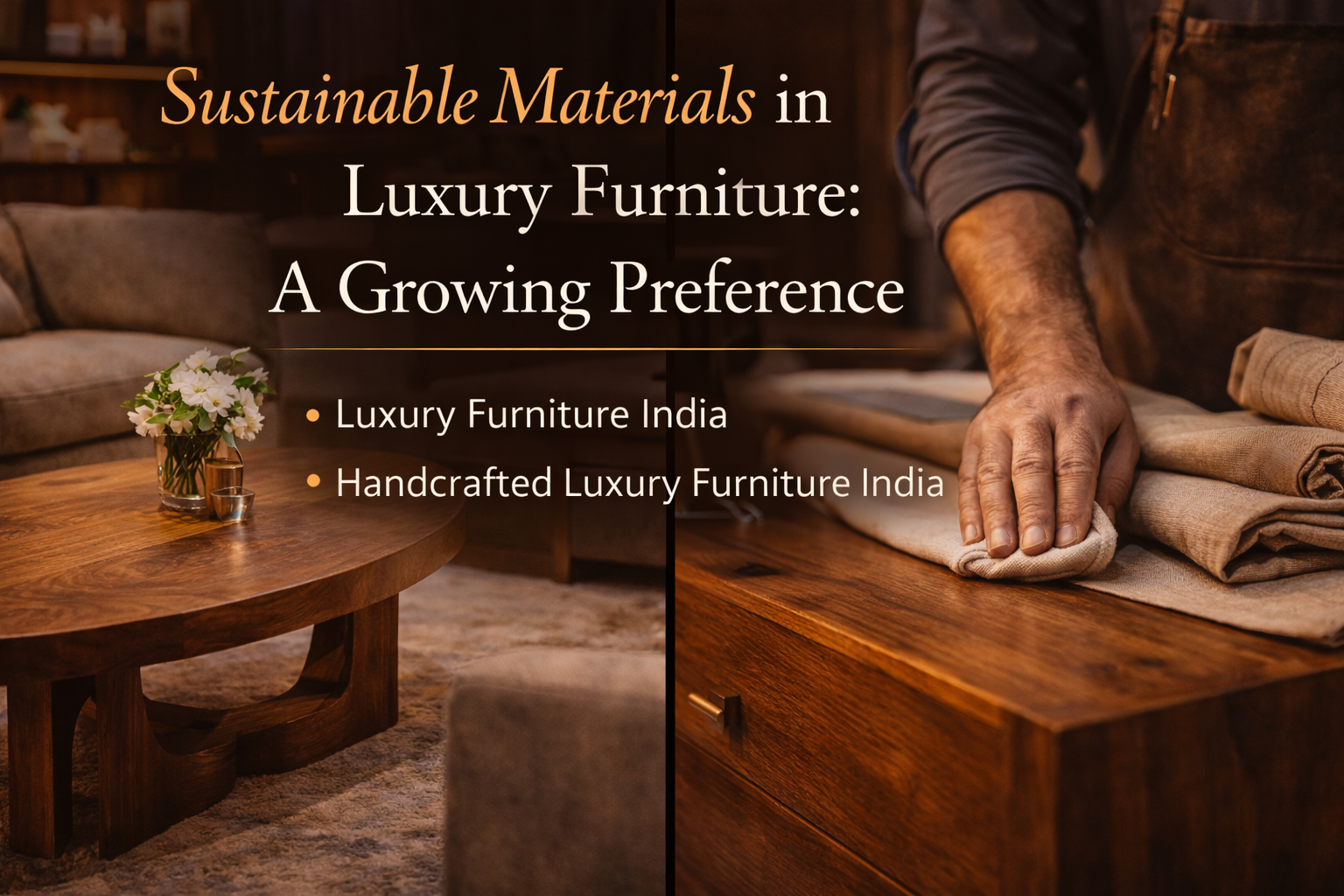
Sustainable Materials in Luxury Furniture: A Growing Preference
Jan
Luxury today is being redefined. Beyond aesthetics and craftsmanship, discerning homeowners and designers are placing increasing value on responsibility, longevity, and mindful material choices. Sustainability is no longer viewed as a compromise—it has become an essential part of modern luxury living.
Across high-end residences, hospitality projects, and bespoke interiors, the demand for luxury furniture India crafted with sustainable materials is steadily rising. This shift reflects a deeper awareness of how furniture is made, where materials come from, and how long products are designed to last.
The Evolution of Luxury and Sustainability
Traditionally, luxury furniture was associated with rarity, opulence, and exclusivity. While these qualities remain important, contemporary luxury now embraces values such as ethical sourcing, durability, and environmental responsibility.
High-end buyers are asking:
- Where do the materials come from?
- How is the furniture crafted?
- Will it age gracefully over time?
- Does it align with responsible living?
This evolving mindset has positioned sustainability as a natural extension of luxury rather than a trend.
Why Sustainable Materials Matter in Luxury Furniture
Sustainable materials offer more than environmental benefits—they enhance the overall quality and integrity of furniture.
Key advantages include:
- Long-term durability
- Natural beauty and character
- Reduced environmental impact
- Timeless appeal
For buyers investing in luxury furniture India, sustainability has become a marker of thoughtful design and refined taste.
Solid Wood from Responsible Sources
Solid wood remains one of the most valued materials in luxury furniture. When sourced responsibly, it offers strength, warmth, and longevity.
Sustainably used woods such as teak, oak, walnut, and ash are prized for:
- Structural integrity
- Natural grain patterns
- Ability to age beautifully
- Repair and refinishing potential
In handcrafted luxury furniture India, solid wood is often selected with care, ensuring minimal waste and long-term performance.
Natural Finishes and Low-Impact Treatments
Sustainable luxury furniture favours finishes that protect materials without harming the environment. Instead of heavy synthetic coatings, many manufacturers now use:
- Natural oils and waxes
- Water-based finishes
- Low-VOC polishes
- Hand-applied surface treatments
These finishes preserve the tactile quality of materials while reducing chemical impact, contributing to healthier indoor environments.
Craftsmanship as a Sustainable Practice
Handcrafting is inherently sustainable. Skilled artisans focus on precision, minimal waste, and quality over quantity.
Handcrafted luxury furniture India stands out because:
- Furniture is made to order, reducing excess production
- Materials are used thoughtfully
- Pieces are designed for longevity rather than disposability
- Repairs and refinishing are possible over time
This approach contrasts sharply with mass production, where furniture is often replaced rather than preserved.
Natural Fabrics and Upholstery Choices
Upholstery plays a key role in sustainable furniture design. Luxury furniture is increasingly using fabrics that balance comfort, durability, and responsible sourcing.
Preferred options include:
- Natural fibre blends
- Linen and cotton-based textiles
- High-quality leathers processed responsibly
- Performance fabrics designed for longevity
These materials maintain luxury appeal while supporting sustainable living standards.
Longevity Over Fast Furniture
One of the most important principles of sustainability is durability. Luxury furniture is not designed for short-term use—it is created to last decades.
Well-crafted furniture:
- Reduces frequent replacement
- Minimises waste generation
- Retains value over time
- Can be refurbished or reupholstered
This philosophy aligns perfectly with the values behind luxury furniture India, where craftsmanship and longevity go hand in hand.
Sustainability in Bespoke and Custom Furniture
Custom furniture plays a vital role in sustainable luxury. Made-to-order pieces ensure that materials, dimensions, and finishes are selected precisely for the space.
Benefits include:
- Reduced material wastage
- Optimised use of resources
- Furniture tailored to actual needs
- Fewer unnecessary purchases
Bespoke design ensures that every piece serves a purpose—both functionally and aesthetically.
Conscious Luxury in Modern Interiors
Today’s luxury interiors are embracing warmth, natural textures, and understated elegance. Sustainable materials complement this aesthetic beautifully, offering depth and authenticity.
Designers are increasingly pairing:
- Natural woods with stone
- Soft textiles with handcrafted frames
- Minimal forms with rich material textures
This design direction reinforces the growing preference for handcrafted luxury furniture India that feels timeless rather than trend-driven.
Why Sustainable Luxury Furniture Is the Future
Sustainability is no longer a niche preference—it is becoming a defining feature of luxury. As awareness grows, buyers are choosing furniture that reflects their values as much as their taste.
Sustainable luxury furniture represents:
- Thoughtful consumption
- Respect for craftsmanship
- Long-term investment
- A refined, responsible lifestyle
This shift is shaping the future of luxury furniture India, where quality, ethics, and beauty coexist.
Conclusion
Sustainable materials are redefining what luxury furniture means in today’s world. From responsibly sourced wood and natural finishes to handcrafted production and long-lasting design, sustainability has become integral to premium interiors.
As demand for luxury furniture India continues to evolve, handcrafted luxury furniture India stands at the forefront—offering furniture that is not only visually elegant but also meaningful, enduring, and responsible.
True luxury today is not just about how furniture looks, but about how thoughtfully it is made.
