

Bespoke Furniture
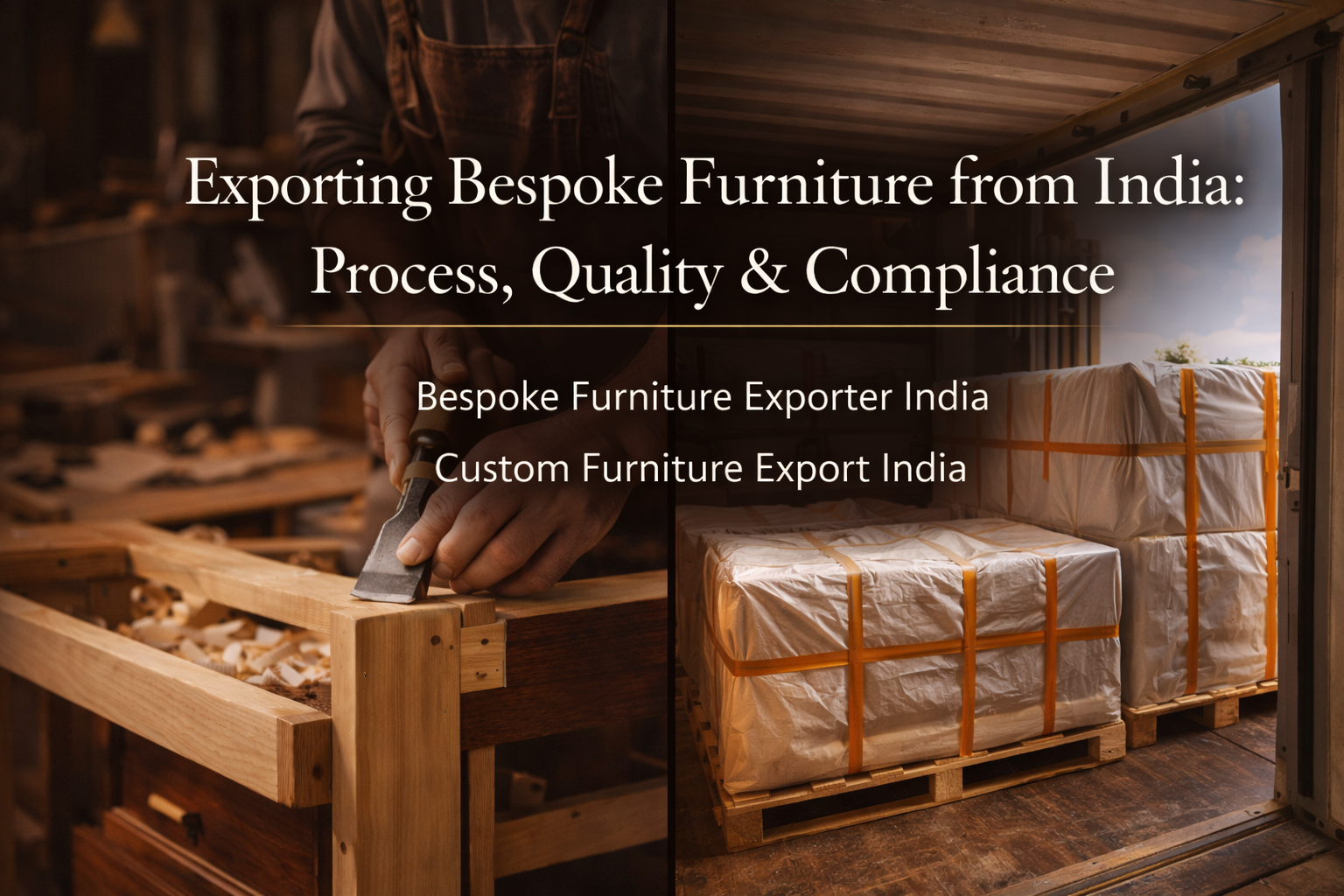
Title: Exporting Bespoke Furniture from India: Process, Quality & Compliance
Jan
India has steadily emerged as a preferred destination for bespoke furniture exports, serving architects, developers, retailers, and hospitality brands across the world. With its deep-rooted craftsmanship, expanding manufacturing capabilities, and strong export infrastructure, the country offers an ideal balance of quality, customization, and reliability.
Today, working with a bespoke furniture exporter India means gaining access to tailored design solutions, global-standard production processes, and end-to-end export support. This article explores how bespoke furniture is exported from India, focusing on process, quality assurance, and compliance standards.
Why India Is a Preferred Hub for Bespoke Furniture Exports
India’s strength in furniture exports lies in its ability to merge traditional craftsmanship with modern manufacturing practices. Global buyers increasingly choose India for projects that demand flexibility, craftsmanship, and scalability.
Key reasons include:
- Strong artisan heritage
- Custom manufacturing capabilities
- Competitive production costs
- Skilled workforce
- Established export infrastructure
These advantages allow a custom furniture export India partner to deliver high-quality, design-led furniture to global markets efficiently.
Step 1: Design Development & Customisation
The export journey begins with design coordination. Bespoke furniture projects typically start with concept drawings, mood boards, or architectural layouts provided by clients or design consultants.
At this stage, exporters collaborate closely to:
- Understand design intent
- Finalise dimensions and proportions
- Select materials and finishes
- Ensure functional and ergonomic suitability
A professional bespoke furniture exporter India translates concepts into detailed technical drawings, ensuring clarity before production begins.
Step 2: Material Selection and Sampling
Material selection is critical for both quality and compliance. Export-oriented manufacturers carefully source materials that meet international expectations for durability and sustainability.
Common materials include:
- Solid hardwoods and engineered boards
- Veneers and natural stones
- Metals and specialty finishes
- Performance-grade upholstery
Samples and mock-ups are often prepared for approval, allowing clients to review finish, texture, and workmanship before mass production.
Step 3: Production Planning and Manufacturing
Once approvals are in place, manufacturing begins under controlled processes. A reliable custom furniture export India operation follows structured production planning to ensure consistency and timelines.
Key manufacturing practices include:
- Precision cutting and machining
- Skilled hand-finishing
- Strong joinery and structural integrity
- Multi-stage quality checks
This hybrid approach—combining craftsmanship with modern machinery—ensures both beauty and durability.
Step 4: Quality Control and Inspection
Quality assurance is central to export-grade furniture. Before packing, each piece undergoes thorough inspection to ensure compliance with agreed specifications.
Quality checks typically cover:
- Dimensional accuracy
- Finish consistency
- Structural stability
- Surface protection
- Functional performance
A dependable bespoke furniture exporter India maintains strict internal quality protocols to reduce rework and ensure customer satisfaction.
Step 5: Compliance With International Standards
Exporting furniture requires adherence to various international regulations depending on the destination country. Compliance ensures smooth customs clearance and acceptance in global markets.
Key compliance areas include:
- Fumigation and phytosanitary certification
- Wood legality and sourcing documentation
- Packaging and labelling standards
- Country-specific import norms
Experienced exporters handle these requirements seamlessly, ensuring furniture meets all legal and regulatory standards.
Step 6: Packaging and Export Logistics
Proper packaging is critical to protect furniture during long-distance transit. Export-grade packaging is designed to withstand handling, stacking, and shipping conditions.
Common practices include:
- Protective wrapping and padding
- Moisture-resistant materials
- Custom crates or cartons
- Clear labelling and documentation
A reliable custom furniture export India partner also coordinates logistics, shipping schedules, and container loading to ensure timely delivery.
Step 7: Global Shipping and Delivery Coordination
Furniture exports typically move via sea freight, though air freight may be used for smaller or urgent consignments. Exporters coordinate with logistics partners to manage:
- Container booking
- Port documentation
- Shipping schedules
- Tracking and updates
Well-established exporters provide transparency throughout the shipping process, keeping clients informed at every stage.
Ensuring Consistency Across Large-Scale Projects
For hospitality, residential, or retail chains, consistency is critical. Export manufacturers in India are experienced in handling repeat orders while maintaining uniform quality.
This includes:
- Standardised production processes
- Approved reference samples
- Quality benchmarks
- Dedicated project coordination
Such systems allow global clients to scale projects with confidence.
Why Global Buyers Choose Bespoke Furniture Exporters from India
International clients prefer Indian exporters because they offer:
- High-quality craftsmanship
- Design flexibility
- Cost efficiency
- Export-ready processes
- Strong communication and coordination
- Reliable timelines
A trusted bespoke furniture exporter India acts as a long-term partner rather than just a supplier.
Conclusion
Exporting bespoke furniture from India is a well-structured process built on craftsmanship, quality control, and global compliance. From concept development and material selection to manufacturing and logistics, each stage is designed to meet international standards.
By working with an experienced custom furniture export India partner, global buyers gain access to refined craftsmanship, scalable production, and dependable delivery — all while maintaining design integrity and quality.
India’s role as a global furniture export hub continues to strengthen, making it an ideal destination for bespoke, high-quality furniture solutions.
